







Ready for the challenge
- Details
There were some major developments in 2010 when it came to procurement challenges. Martin Vincent looks at the lessons to be learned, and makes some predictions for the next 12 months.
There is no doubt that the economic climate, the press coverage around the Remedies Directive and the entry into the marketplace of “after the event” insurers has already led to an increase in the number of procurement challenges. The implementation of the Comprehensive Spending Review will see the pressure on suppliers increase as they chase reducing budgets. The most determined and dangerous challenger is usually the one that has just lost the contract.
As a rule, the smaller the size of that organisation, the more likely they are to challenge. This is because they have most to lose in terms of percentage of their turnover and loss of your contract could threaten their solvency.
Within all this activity we have seen some trends emerge in challenges during 2010, for example;
Transparency
Following on from Lianakis there has been a huge spike in claims to do with disclosure of marking regimes. The law is now settled, and buyers must give bidders all the information they need in order to formulate their best bid. If the bidder could legitimately say that their bid would have been different if they had known about a withheld method of assessment, then the contracting authority is in real trouble.
One to watch for the future is allegations of breaches of transparency in relation to market warm-up exercises. Don’t tell the marketplace that the warm-up has covered all the criteria you will use in the tender, and then “surprise” them with some extra criteria in the ITT documents.
We’ve also had a salutary lesson in the use of CPV codes. Don’t forget to use the most specific ones for the procurement and avoid reliance on the generic ones. The CPV codes are used by people who may not have English as a first language to understand your requirements. Failure to use the correct and detailed CPV codes is a breach of the transparency requirements.
Criteria
Although it remains true that contracting authorities have discretion when setting criteria, please make sure you don’t go too far. In a recent case a criterion that stated that front-of-house leaflet distribution services must be provided by staff with a degree involving EU law was held to be unjustifiable.
Development Agreements
Beware relying on the regulation 6(2)e exemption. Recent cases show that if you specify your requirements, can enforce those requirements through a contract, have a “pecuniary interest” in the works and/or derive a “direct economic benefit” from the development, then it’s probably a public works contract and needs treating accordingly.
The above topics represent the bulk of procurement challenge relevant to the UK in 2010. By further analysis, we can start to understand the risk hot-spots in the traditional procurement process. It is now established law that a challenger cannot wait until they have been excluded from a process to complain. They should bring their action when the breach occurred. Due to the limitation period for bringing claims (“promptly and in any event 3 months”), many claims in relation to the early stages of the procurement do not survive the limitation test and the vast majority of claims concentrate on the latter part of the process:
Confusion between “selection” and “award” criteria
Regulation 30 contains the usual list of award criteria. If you are using “Most Economically Advantageous Tender” as your award criteria – then only use award criteria obviously established as helping you identify the most economically advantageous tender. An easy rule-of-thumb is that selection criteria are designed to establish a group of suppliers capable of fulfilling your needs. The award stage is the mechanism by which you choose a supplier from that group. Usually, selection criteria are concerned with things that have happened in the past (e.g. experience, ISO certifications etc.); while award criteria are concerned with what will happen in the future (e.g. pricing, project methodologies etc.)
Interviews & Debriefs
The risk in face-to-face interactions is that someone goes off-script. At this point it is difficult to show equality of treatment in the process. In most challenges, a significant portion of the particulars of claim are evidenced by what was/was not said in the interview and/or a verbal debrief. There is no requirement to have a face to face debrief. In most cases, a written debrief is “safer” from a contracting authority’s perspective. The remedies directive now states that you must notify applicants of their exclusion from the procurement process at both PQQ and tender stages by the issue of an “Award Decision Notice” which must contain information which is different if the supplier is excluded at PQQ or tender stage; for example:
- The criteria for award of the contract
- The “characteristics and relative advantages of the successful tenderer”
- The score of the recipient and that of the successful tenderer
- Details of when the standstill period will end
Once the contract has been awarded, please be careful amending it. If such an amendment is a “material change” then this should trigger a re-tender. We’ve had some guidance on what constitutes a “material change”, and the current list of examples includes introducing a change that would have widened the potential pool of applicants, extends the scope of the award, or means you would pay the supplier more money. In terms of the scale of the change in order for it to be “material”, then we need more cases to be certain. What we can say is that no change is fine, but a 10% change is definitely not.
Successful claims
A theme that has crystallised during 2010 is that it is now possible to categorise which claims are most likely to succeed. This “Claims Hierarchy” can be summarised as follows:
- Procedural Breaches: Claims based on a failure to observe the procedural requirements are easy to evidence and hence likely to succeed.
- Breach of obligations: The obligations in this context include transparency, proportionality, non-discrimination etc. Although harder to spot and prove, there are lots of potential grounds here for a determined supplier who has time to spend in careful scrutiny of the documents.
- Material Changes: If a supplier discovers that the successful tenderer’s award has altered since the tender process then it is possible to evidence that and trigger a re-tender; however, looking at the minutia of specifications in the hope of amassing enough changes for the totality to be “material” is a difficult process and can be evidentially weak.
- Marking errors: Much to the surprise of an unsuccessful tenderer, the courts have been reluctant to examine the relative merits of bids and therefore a claim based on “I should have had more marks than company X” is very unlikely to succeed.
Predictions for 2011
- More challenges due to the decreased opportunities as the impact of the CSR is felt
- More creative use of the implied contract between tenderer and assessor. This is not an EU remedy and is based in common law. As such it is much harder to predict the ways in which this will evolve
- Expansion of the concept of “transparency” to include activities outside the tender process itself
- Challenges based on frameworks and call off procedures.
Martin Vincent is head of education and procurement at Mace & Jones. He can be contacted on 0161 214 0500 or by email at
There were some major developments in 2010 when it came to procurement challenges. Martin Vincent looks at the lessons to be learned, and makes some predictions for the next 12 months.
There is no doubt that the economic climate, the press coverage around the Remedies Directive and the entry into the marketplace of “after the event” insurers has already led to an increase in the number of procurement challenges. The implementation of the Comprehensive Spending Review will see the pressure on suppliers increase as they chase reducing budgets. The most determined and dangerous challenger is usually the one that has just lost the contract.
As a rule, the smaller the size of that organisation, the more likely they are to challenge. This is because they have most to lose in terms of percentage of their turnover and loss of your contract could threaten their solvency.
Within all this activity we have seen some trends emerge in challenges during 2010, for example;

Transparency
Following on from Lianakis there has been a huge spike in claims to do with disclosure of marking regimes. The law is now settled, and buyers must give bidders all the information they need in order to formulate their best bid. If the bidder could legitimately say that their bid would have been different if they had known about a withheld method of assessment, then the contracting authority is in real trouble.
One to watch for the future is allegations of breaches of transparency in relation to market warm-up exercises. Don’t tell the marketplace that the warm-up has covered all the criteria you will use in the tender, and then “surprise” them with some extra criteria in the ITT documents.
We’ve also had a salutary lesson in the use of CPV codes. Don’t forget to use the most specific ones for the procurement and avoid reliance on the generic ones. The CPV codes are used by people who may not have English as a first language to understand your requirements. Failure to use the correct and detailed CPV codes is a breach of the transparency requirements.
Criteria
Although it remains true that contracting authorities have discretion when setting criteria, please make sure you don’t go too far. In a recent case a criterion that stated that front-of-house leaflet distribution services must be provided by staff with a degree involving EU law was held to be unjustifiable.
Development Agreements
Beware relying on the regulation 6(2)e exemption. Recent cases show that if you specify your requirements, can enforce those requirements through a contract, have a “pecuniary interest” in the works and/or derive a “direct economic benefit” from the development, then it’s probably a public works contract and needs treating accordingly.
The above topics represent the bulk of procurement challenge relevant to the UK in 2010. By further analysis, we can start to understand the risk hot-spots in the traditional procurement process. It is now established law that a challenger cannot wait until they have been excluded from a process to complain. They should bring their action when the breach occurred. Due to the limitation period for bringing claims (“promptly and in any event 3 months”), many claims in relation to the early stages of the procurement do not survive the limitation test and the vast majority of claims concentrate on the latter part of the process:
Confusion between “selection” and “award” criteria
Regulation 30 contains the usual list of award criteria. If you are using “Most Economically Advantageous Tender” as your award criteria – then only use award criteria obviously established as helping you identify the most economically advantageous tender. An easy rule-of-thumb is that selection criteria are designed to establish a group of suppliers capable of fulfilling your needs. The award stage is the mechanism by which you choose a supplier from that group. Usually, selection criteria are concerned with things that have happened in the past (e.g. experience, ISO certifications etc.); while award criteria are concerned with what will happen in the future (e.g. pricing, project methodologies etc.)
Interviews & Debriefs
The risk in face-to-face interactions is that someone goes off-script. At this point it is difficult to show equality of treatment in the process. In most challenges, a significant portion of the particulars of claim are evidenced by what was/was not said in the interview and/or a verbal debrief. There is no requirement to have a face to face debrief. In most cases, a written debrief is “safer” from a contracting authority’s perspective. The remedies directive now states that you must notify applicants of their exclusion from the procurement process at both PQQ and tender stages by the issue of an “Award Decision Notice” which must contain information which is different if the supplier is excluded at PQQ or tender stage; for example:
- The criteria for award of the contract
- The “characteristics and relative advantages of the successful tenderer”
- The score of the recipient and that of the successful tenderer
- Details of when the standstill period will end
Once the contract has been awarded, please be careful amending it. If such an amendment is a “material change” then this should trigger a re-tender. We’ve had some guidance on what constitutes a “material change”, and the current list of examples includes introducing a change that would have widened the potential pool of applicants, extends the scope of the award, or means you would pay the supplier more money. In terms of the scale of the change in order for it to be “material”, then we need more cases to be certain. What we can say is that no change is fine, but a 10% change is definitely not.
Successful claims
A theme that has crystallised during 2010 is that it is now possible to categorise which claims are most likely to succeed. This “Claims Hierarchy” can be summarised as follows:
- Procedural Breaches: Claims based on a failure to observe the procedural requirements are easy to evidence and hence likely to succeed.
- Breach of obligations: The obligations in this context include transparency, proportionality, non-discrimination etc. Although harder to spot and prove, there are lots of potential grounds here for a determined supplier who has time to spend in careful scrutiny of the documents.
- Material Changes: If a supplier discovers that the successful tenderer’s award has altered since the tender process then it is possible to evidence that and trigger a re-tender; however, looking at the minutia of specifications in the hope of amassing enough changes for the totality to be “material” is a difficult process and can be evidentially weak.
- Marking errors: Much to the surprise of an unsuccessful tenderer, the courts have been reluctant to examine the relative merits of bids and therefore a claim based on “I should have had more marks than company X” is very unlikely to succeed.
Predictions for 2011
- More challenges due to the decreased opportunities as the impact of the CSR is felt
- More creative use of the implied contract between tenderer and assessor. This is not an EU remedy and is based in common law. As such it is much harder to predict the ways in which this will evolve
- Expansion of the concept of “transparency” to include activities outside the tender process itself
- Challenges based on frameworks and call off procedures.
Martin Vincent is head of education and procurement at Mace & Jones. He can be contacted on 0161 214 0500 or by email at
Sponsored articles


Walker Morris supports Tower Hamlets Council in first known Remediation Contribution Order application issued by local authority
Jobs




















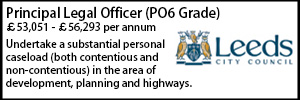





Paralegal

Chief Lawyer - Contracts

Litigation Lawyer

Local Government Lawyer - Commercial Property
Locums
Directory




Events



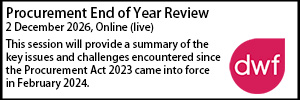
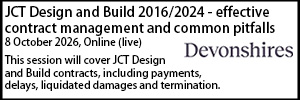

08-10-2026 2:00 pm
14-10-2026 4:00 pm
20-10-2026 2:00 pm
03-11-2026 12:00 pm
18-11-2026 11:00 am
19-11-2026 12:00 pm
24-11-2026 12:00 pm
01-12-2026
01-12-2026 12:00 pm
To Be Confirmed
To Be Confirmed
To Be Confirmed
To Be Confirmed
