







Ministers give green light to Major Projects Authority
- Details
All major government projects will be subject to improved scrutiny following the launch of the new Major Projects Authority (MPA) last week, the government has announced.
According to the Cabinet Office and the Treasury, the four main components of the new arrangements are:
- The Government Major Project Portfolio: this will consist of all central Government funded projects/programmes which require approval by the Treasury during their life. The MPA will publish an annual report on the progress of the portfolio every year
- Integrated assurance and approvals: this will see the planning, coordination and provision of assurance activities throughout the "policy to delivery" lifecycle in a way which provides greater assurance with less effort. Every project will be required to prepare an integrated assurance and approval plan. This plan will "indicate how assurance reviews of all types will be scheduled to support decision making and inform approvals by the Cabinet Office and the Treasury, while avoiding duplication and activity which does not add value"
- Consequential assurance and intervention: a more intensive approach will be adopted for projects that have particular problems. The MPA will discuss with the Cabinet Office the need for additional assurance and where necessary will arrange extra support for the project in question. If issues are not being resolved effectively, there will be an escalation process to ministers
- Transparent reporting: this will include publication of project contracts on line, and the annual report on progress.
Central government departments have been ordered with immediate effect to engage a 'starting gate review' to assess the deliverability of all major new policy and change initiatives before project delivery gets underway. "Alongside this, the Treasury will need to assess affordability well before any call for tenders or contract awards are made," the government said. Departments will also be expected to develop assurance and approvals plans for each major project, cooperate with the MPA on additional assurance and support where necessary, and support capability-building work.
The MPA – a partnership between the Cabinet Office and the Treasury – will have “an enforceable mandate from the Prime Minister”, the government said.
Cabinet Office Minister Francis Maude claimed that government projects had previously had a poor delivery record.
“There was no cross-governmental understanding of the size and cost of the government’s Major Project portfolio, and projects often began with no agreed budget, no business case and unrealistic delivery timetables,” he said. “This Government will not allow that costly failure to continue.”
Maude suggested that the MPA would work in collaboration with central government departments to help get firmer control of major projects both at an individual and portfolio level.
Chief Secretary to the Treasury, Danny Alexander, said: “Government’s largest projects must receive maximum scrutiny, so that we can avoid the huge cost overruns seen in the past. Establishing the Major Projects Authority marks a very important step towards achieving this aim. By bringing together financial, commercial and project management expertise, I believe it will help us deliver successful projects on time and on budget.”
The launch of the MPA follows the Major Projects Review, which was conducted between June and August 2010. The review looked at 204 projects, of which 64 were examined closely and 31 subjected to deep investigation. A number of contracts were terminated or re-scoped as a result.
Philip Hoult
All major government projects will be subject to improved scrutiny following the launch of the new Major Projects Authority (MPA) last week, the government has announced.
According to the Cabinet Office and the Treasury, the four main components of the new arrangements are:
- The Government Major Project Portfolio: this will consist of all central Government funded projects/programmes which require approval by the Treasury during their life. The MPA will publish an annual report on the progress of the portfolio every year
- Integrated assurance and approvals: this will see the planning, coordination and provision of assurance activities throughout the "policy to delivery" lifecycle in a way which provides greater assurance with less effort. Every project will be required to prepare an integrated assurance and approval plan. This plan will "indicate how assurance reviews of all types will be scheduled to support decision making and inform approvals by the Cabinet Office and the Treasury, while avoiding duplication and activity which does not add value"
- Consequential assurance and intervention: a more intensive approach will be adopted for projects that have particular problems. The MPA will discuss with the Cabinet Office the need for additional assurance and where necessary will arrange extra support for the project in question. If issues are not being resolved effectively, there will be an escalation process to ministers
- Transparent reporting: this will include publication of project contracts on line, and the annual report on progress.
Central government departments have been ordered with immediate effect to engage a 'starting gate review' to assess the deliverability of all major new policy and change initiatives before project delivery gets underway. "Alongside this, the Treasury will need to assess affordability well before any call for tenders or contract awards are made," the government said. Departments will also be expected to develop assurance and approvals plans for each major project, cooperate with the MPA on additional assurance and support where necessary, and support capability-building work.
The MPA – a partnership between the Cabinet Office and the Treasury – will have “an enforceable mandate from the Prime Minister”, the government said.

Cabinet Office Minister Francis Maude claimed that government projects had previously had a poor delivery record.
“There was no cross-governmental understanding of the size and cost of the government’s Major Project portfolio, and projects often began with no agreed budget, no business case and unrealistic delivery timetables,” he said. “This Government will not allow that costly failure to continue.”
Maude suggested that the MPA would work in collaboration with central government departments to help get firmer control of major projects both at an individual and portfolio level.
Chief Secretary to the Treasury, Danny Alexander, said: “Government’s largest projects must receive maximum scrutiny, so that we can avoid the huge cost overruns seen in the past. Establishing the Major Projects Authority marks a very important step towards achieving this aim. By bringing together financial, commercial and project management expertise, I believe it will help us deliver successful projects on time and on budget.”
The launch of the MPA follows the Major Projects Review, which was conducted between June and August 2010. The review looked at 204 projects, of which 64 were examined closely and 31 subjected to deep investigation. A number of contracts were terminated or re-scoped as a result.
Philip Hoult
Sponsored articles


Walker Morris supports Tower Hamlets Council in first known Remediation Contribution Order application issued by local authority
Jobs






















Paralegal

Local Government Lawyer - Commercial Property

Litigation Lawyer

Chief Lawyer - Contracts
Locums
Directory




Events

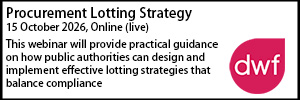
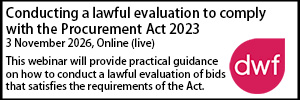
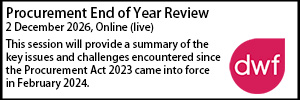

14-10-2026 4:00 pm
20-10-2026 2:00 pm
03-11-2026 12:00 pm
18-11-2026 11:00 am
19-11-2026 12:00 pm
24-11-2026 12:00 pm
01-12-2026
01-12-2026 12:00 pm
To Be Confirmed
To Be Confirmed
To Be Confirmed
To Be Confirmed
